
Organizing your Self: following your intuition to keep track of All the Things as an ND creative.
Organization is such a huge topic, especially in the neurodivergent world and most particularly among ADHD women. Each one of us has a relationship with this topic that is both highly fraught from a lifetime of tiny traumas and highly individualized in terms of what works for us and what doesn’t.
Because it is such a charged topic, I want to break it down and discuss one specific aspect of organization that many ND women struggle with, and that is trusting yourself.
Because no matter how logical or perfectly constructed a system may be, it will collapse time and time again if it is not a system that is built around you.
So before I dive in, I want to be clear about what I’m not going to talk about: I’m not going to tell you that you just haven’t found the right journal, or that you should just make a different version of the same to-do list, and I'm not pretending that I have the secret to the Perfect Method™.
When it comes to organization, there are no one-size-fits-all solutions and no magic bullets. This shit is hard and frustrating and figuring it out is a life’s work.
Because that, I’ve realized, is the key: as an AuDHD woman, when I seek organization, I’m seeking a sense of calm and a feeling of control. And the best way to feel calm and in control of my life is to connect with my intuitive self and trust in my ability to meet my own needs.
For many years, I was near-obsessed with the idea that Getting Organized™ would solve all my problems and help me to feel better both in my body and about myself and my life. I was also absolutely exhausted by my utter inability to stick with a system for more than a few weeks—or a couple months, if I was really lucky. The never-ending cycle of boom and bust, high and low, had worn me out. The build-up to creating a new system? So sweet, so thrilling. The feelings of shame and embarrassment when it all came crashing down? Pretty devastating.
Me, I’m a note taker. I will scribble an important thing down on a piece of paper and then lose it forever. Or, more likely, it will get lost in an overwhelming, rapidly-accrued pile of other, identical notes of varying importance. I didn’t even realize this was something I did until my early twenties, when my boyfriend teased me about all the scraps of paper I left around our apartment. I can still remember feeling a mixture of shame and embarrassment at being perceived in a way that felt less-than flattering.
Over the years, I attempted to correct this perceived deficit by confining my notes to a notebook, but I kept finding that notebooks have several core incompatibilities with my brain: a notebook has to be at hand in the instant you need it, it has to be open to the page you need at any given moment, you have to make time to review and connect previous notes, and due to a notebook’s literal bound nature, there’s never a sense of tasks diminishing.
I tried to find ways to accommodate these shortcomings. But despite recognizing that this method was not working for me, I continued to operate as if the flaw was with me, and not with the method itself. I tried lined notebooks, binder notebooks, bullet journals, art journals, journals with pre-printed templates, journals that tracked my goals, habits, and gratitude. Nothing stuck, but not only that, nothing brought me the sensation of calm organization that I was seeking, even in the few weeks I did stick with them.
The farther I went down this path, the more subsumed I became by the neurotypical rhetoric about how I should be organizing my life and what tools should work for me, and the farther I felt from myself.
I’m not surprised that I felt this way; in Western medicine and culture, the symptoms of neurodivergence are defined on a deficit model: a lack of executive function, an over-reaction to stimuli, a decrease in affect. So clearly my inability to adhere to a system of organization was a flaw with me and not with the rigid standardization of organization itself—right?

Everything changed for me when I received my diagnosis at age 33. Once I began to understand and accept myself as neurodivergent, the way I thought about the concept of organization started to shift. Rather than continuing to beat my head against a metaphorical brick wall of endless notebooks, I started paying attention to the way my brain intuitively wants to track information, and leaned into that.
It started with returning to the scrap system of my youth, the method by which I had instinctively kept track of things before I’d been shamed onto a more neurotypical path.
I admit, it was chaos at first. But as I continued to pay attention to my intuition—‘how does my brain want to keep track of this information,’ rather than ‘what ways can I think of to keep track of it’—the jumbled system of tiny papers slowly grew into to a hierarchy of notepaper, command centers, and cork boards. This method is now so well-integrated into my life and my physical space, I hesitate to even call it a system.
When I first sat down to write this, I thought it was important that I break down my personal system for you. But I quickly realized that you don’t need to know exactly which size paper I use for a particular category of note. What you need to know is that trusting in my own instinctive ability to keep track of the things I need has enabled me to structure my life in a way where that feels more possible.
And it works for me. Do I execute my system perfectly all the time? Of course not. Does it require periodic course correction as my needs change and grow? Absolutely. But, because it is integrated into my life and the essence of who I am, finding my way back to it after an organizational break has fewer barriers. And most importantly, I feel calm and in control doing it.
It’s not a system that I can package up and sell to someone else; it is highly personalized and intrinsically tied to my circumstances and the way I live. But in this, it is designed to support my instincts rather than to work against them.
Through this process, I have realized that my previous attempts at System™ building failed because I was trying to impose an external framework on an internal need. To put it another way, it was as if I was trying to force a tree to grow into a particular shape, rather than supporting the branches where they grow instinctively.
I now know that if and when I trust myself by connecting to my intuition, I can find my way through the chaos of my mind toward calm and control. And that’s a deeply powerful realization.
This is just one example of the many intertwining organizational systems that help me to keep track of items, tasks, errands, concepts, goals, and projects. Some systems are more rigid, some are more flexible. I don’t adhere to any of them with 100% perfection because I am a human and humans are imperfect. But all of these systems are kept in flow because they are based around the same basic principles of trusting my intuition and meeting myself where I am.
So, how can you, a neurodivergent person with a creative bent, learn to connect with and trust your intuition? By engaging in an activity that is embodying and in which you find flow. Once you learn to identify how this feels in your body, you can begin to recognize all the things that foster this feeling and all those that diminish it.
Personally, I’ve found success with the practice of energetic meditation, but there are other many other mind-body approaches out there: you could engage in your hobbies or special interests without expectations of productivity; you could go for walks in nature, pracrice tai chi, yoga, qigong, mindfulness meditation, or breathwork; or, you could even spend time with people who make you feel most like yourself. These are just some among the many ways you can build an awareness of your innermost self.
And the best part about finding and nurturing this part of yourself, is that it’s also where your creativity lives. So when you connect with your intuition, not only are you supporting your ability to organize the information you need to accomplish your goals, you’re also supporting your unique and authentic creative spark. So, let your intuition reign and you may just find your way to your own personal flow of creative energy.
Are you ready to share your creative spark with the world? Let me support you in telling your authentic story. Contact me today to learn more about my neuro-affirming editorial services .
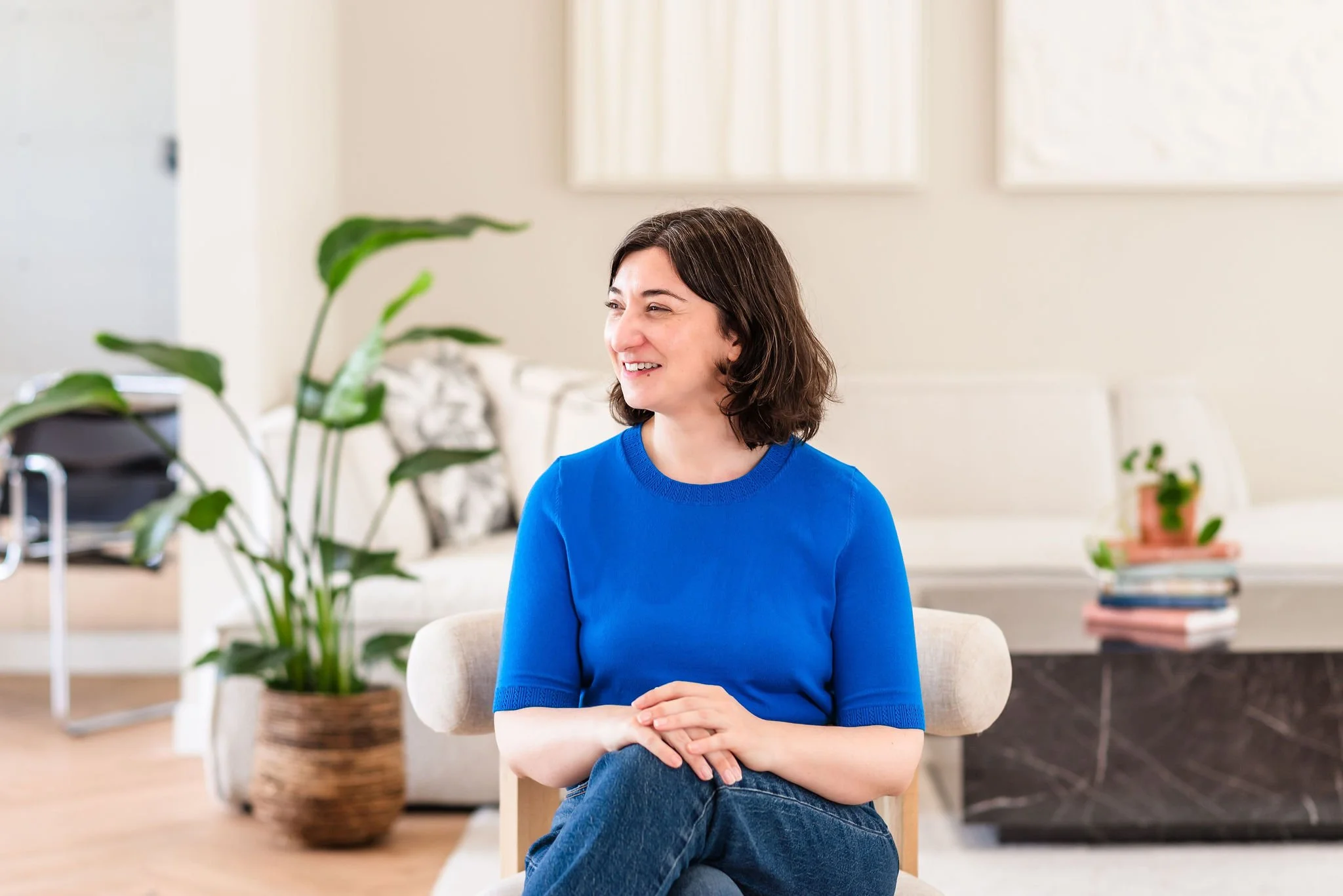
Rachel Porter is an AuDHD woman who provides neuro-affirming support for writers and creatives at Authentic Self Editorial.